Ad Refresh
Definition & Explanation
Ad refresh is the practice of automatically replacing one ad with another within the same ad slot on a webpage, without the user navigating to a new page. Each time an ad is swapped out, a new ad impression is recorded, meaning a single page view can generate multiple impressions from a single placement.
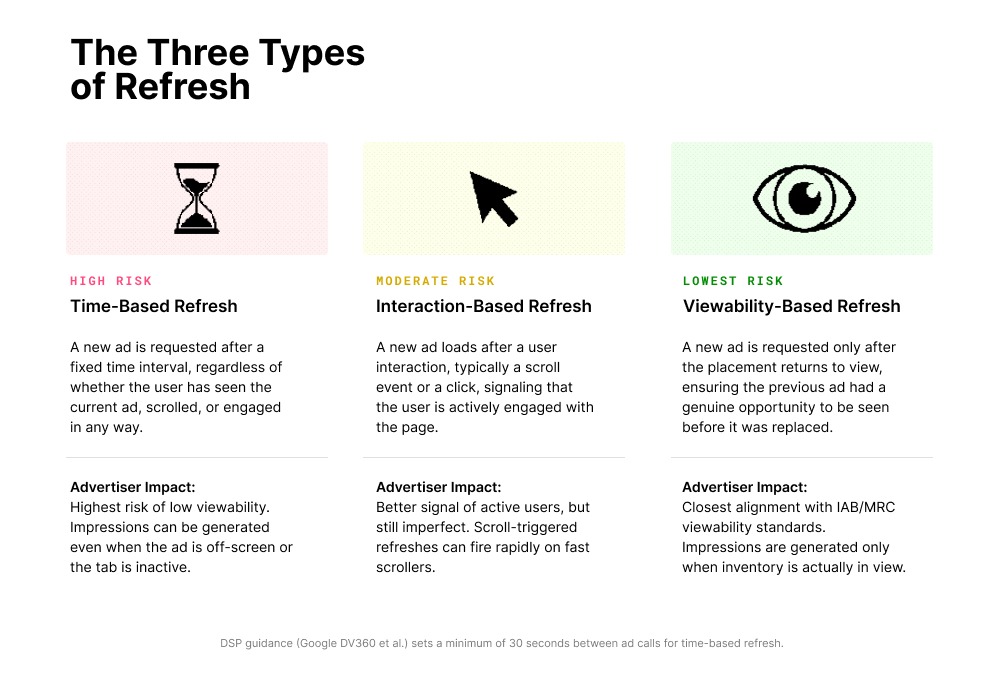
Ad refresh is typically triggered in one of three ways:
- Time-based refresh: A new ad is called after a fixed interval (e.g. every 30 seconds).
- User interaction-based refresh: A new ad loads after a user interaction, such as a scroll or a click.
- Viewability-based refresh: A new ad is requested only when the placement comes back into view after a period of not being visible.
Of these, viewability-based refresh is generally considered the most advertiser-friendly, because it ensures that only genuinely in-view placements generate new impressions. Time-based refresh is the most common but also the most prone to abuse, particularly when intervals are very short.
Why It Matters
Ad refresh directly affects the quality of impressions that advertisers purchase. When refresh rates are aggressive, meaning ads rotate very rapidly, several problems emerge:
- Viewability suffers: Rapidly refreshed ads may never be seen before they are replaced. The IAB and MRC define a viewable display impression as one where at least 50% of the ad is in view for at least one continuous second (1). Very fast refresh intervals make this standard difficult to meet.
- Campaign performance metrics are distorted: Frequency capping, a tool advertisers use to limit how many times a given user sees the same creative, becomes unreliable when multiple impressions are generated in a short time from the same placement.
- CPMs are artificially diluted: By increasing impression volume without a corresponding increase in audience reach, aggressive refresh inflates supply and can drive down the price advertisers pay per impression, even while total spend remains constant.
- Brand experience degrades: Users may encounter the same creative multiple times in a single session, creating an intrusive or repetitive experience.
On the publisher side, ad refresh is a legitimate revenue tool, when used responsibly. Publishers who maintain longer refresh intervals and tie refreshes to genuine user engagement can generate incremental revenue without undermining the inventory’s quality or their relationships with demand partners.
Ad Refresh Across the Ecosystem
The standard guidance from major DSPs, including Google’s Display & Video 360, is that there should be a minimum of 30 seconds between ad refreshes (2). This threshold exists because it gives a user a reasonable amount of time to view and potentially engage with an ad before it is replaced.
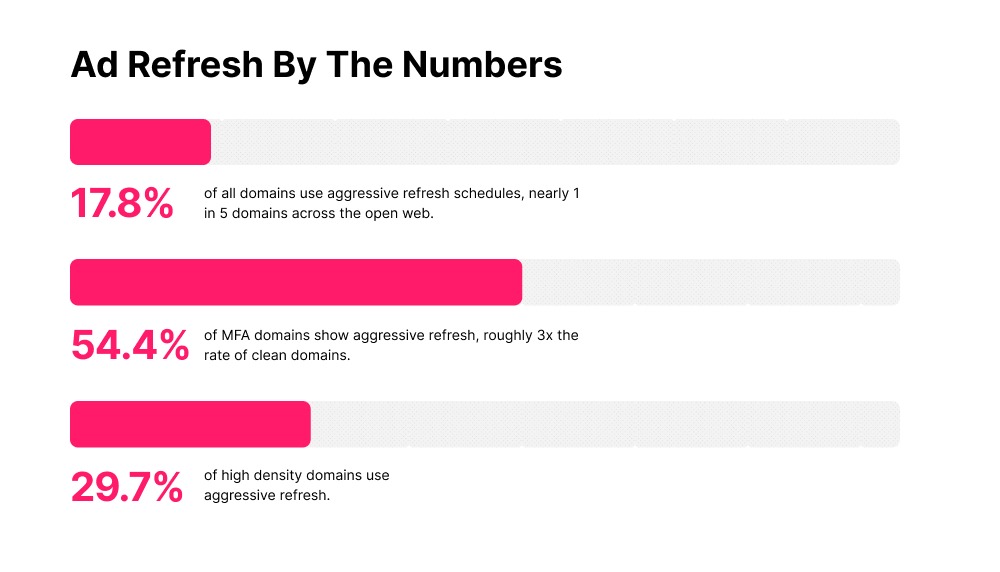
Despite this guidance, compliance is inconsistent across the open web. Based on observed data, nearly 1 in 5 domains (approximately 17.8%) are operating below the 30-second threshold, generating large volumes of low-quality impressions in the process. Some publishers, particularly those with high session durations or scroll-heavy formats, use refresh to maximize yield.
The relationship between aggressive refresh and other inventory quality signals is also notable. Sites with high ad density (defined as more than 30% of the page occupied by ads) are nearly twice as likely to run aggressive refresh schedules: 29.7% of high-density domains use aggressive refresh, compared to 16.8% of regular domains. That said, the two signals are independent. A site can have low ad density but still run an aggressive refresh schedule, and vice versa.
MFA (Made for Advertising) domains show particularly problematic refresh behavior. More than half (54.4%) of MFA domains employ aggressive refresh, roughly three times the rate of clean domains (17.6%). This makes refresh behavior a meaningful signal in identifying low-quality inventory environments.
Because ad refresh behavior is not always disclosed in bid requests, buyers often have limited visibility into whether the inventory they are purchasing comes from refreshed placements. This makes third-party measurement and pre-bid signals particularly important for buyers who want to understand the refresh environment before committing spend.
Ad Refresh in DeepSee.io Metrics
DeepSee.io measures ad refresh behavior directly by observing the timing of ad calls during crawls. This allows us to surface real-world refresh patterns rather than relying on publisher disclosure.
We apply four signals based on refresh schedule behavior:




The 30-second threshold used in our signal set aligns with the guidance set by leading DSPs. Video ad units are excluded from this measurement, as video placements have fixed durations that may naturally fall below 30 seconds and operate under different inventory norms.
Together, these signals quickly identify whether a publisher, or the manager behind a portfolio of sites, is operating within generally accepted refresh standards.
Sources
- IAB & MRC: Display & Rich Media Ad Measurement Guidelines: iab.com
- Google DV360: Publisher Ad Refresh Policy: support.google.com