Ad Density
Definition & Explanation
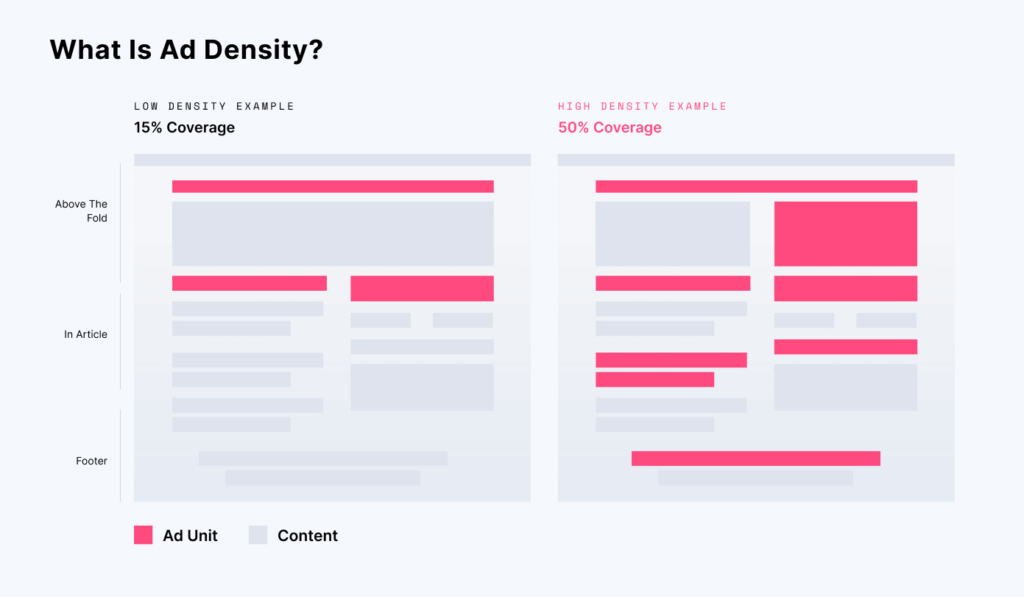
Ad Density refers to the ratio of ad space to content on a webpage. It’s typically calculated by comparing the vertical height or area that ads occupy within the main content section to the total content area. For example, if ads occupy 300 pixels of a 1000-pixel content area, the ad density is 30%.
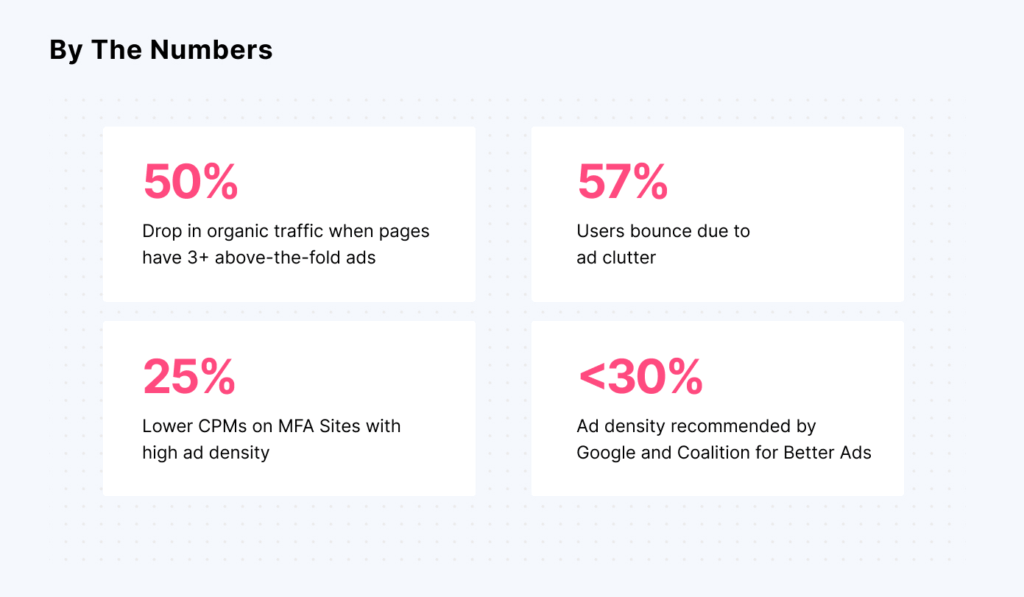
Industry standards suggest ad density should stay below 30% on mobile to avoid disrupting the user experience (1). Above-the-fold ad density (ads visible before scrolling) is especially important, as high density here can significantly reduce engagement and organic traffic (2).
Why It Matters
High ad density creates problems across the board.
It hurts user experience. Pages overloaded with ads quickly become overwhelming for users. 86% of users say cluttered layouts make it harder to focus, and that often leads to ad blindness or the use of blockers just to access the content (3).
It also reflects poorly on the brands running those ads. When ads show up in noisy or intrusive environments, they feel less trustworthy. 71% of consumers say they’re less likely to buy from a brand if the ad experience is annoying or excessive (3).
Performance also suffers- heavier ad loads tend to slow down the page, drop CTRs, and cause users to bounce before they ever engage. As page load times go from one second to 10 seconds, the probability of a mobile site visitor bouncing increases by 123% (4).
All of this adds up to lower inventory value. When ad density is too high, viewability drops, bounce rates climb, and CPMs slide. These sites deliver worse engagement metrics and are routinely deprioritized by buyers as a result (5).
Ad Density Across the Ecosystem
Ad density plays a critical role across the programmatic ecosystem. Demand-side platforms (DSPs) use it as part of their pre-bid filtering logic to avoid placements on cluttered, low-engagement pages. Buyers seeking performance and brand safety can exclude high-density domains to maintain campaign quality and user experience.
On the supply side, publishers track ad density to ensure compliance with standards like Google’s Ad Experience Report. Staying below threshold levels is essential to avoid penalties, lost impressions, or ad blocking.
Ad Density in DeepSee.io Metrics
In the DeepSee.io platform, ad density is measured and reported as part of a site’s advertising experience. The data is segmented into three phases of the user journey- Above the Fold (initial view), In Article (mid-journey), and Final (footer or last visible section). For each section, we display average ad density and allow breakdown by ad type: display, native, and video.
A key component of this report is the identification of risk thresholds:
- Peak Density Average ≥ 50%: A site is flagged as high-risk if ads occupy half or more of the screen during at least one snapshot in a crawl. This is rare – fewer than 1% of all sites DeepSee tracks exceed this threshold.
- ≥ 35% Average Snapshot Density: If the average percentage of the screen covered by ads during a crawl exceeds 35%, the site is flagged for anomalously high density. Again, this occurs in only ~1% of domains, highlighting it as a strong indicator of over-monetization or poor user experience.
You can read more about our high risk signals here.
The advertising tab in our portal displays both of these metrics alongside other indicators such as average snapshot density, average peak density, and the peak-to-mean ratio. These allow buyers to evaluate how consistent or spike-y a site’s monetization layout is.
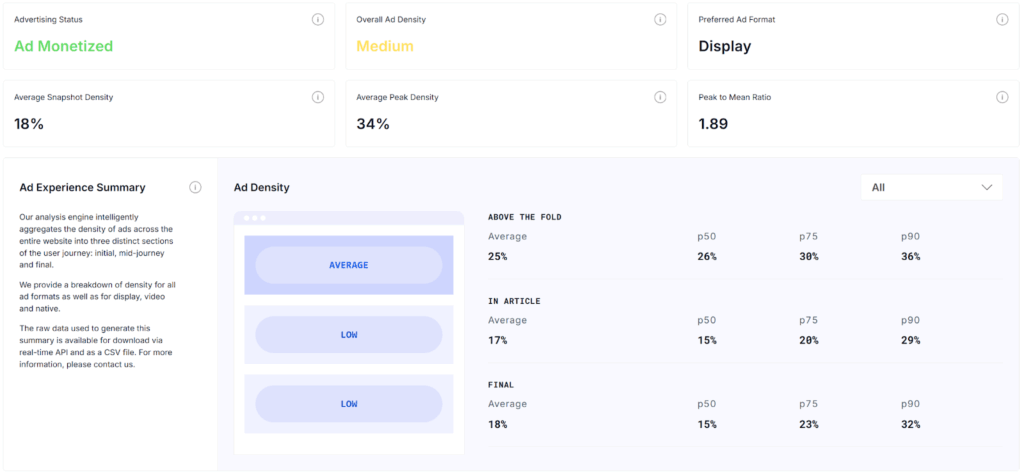
This data is also accessible via API, with full reporting on ad type density and density per user journey segment.